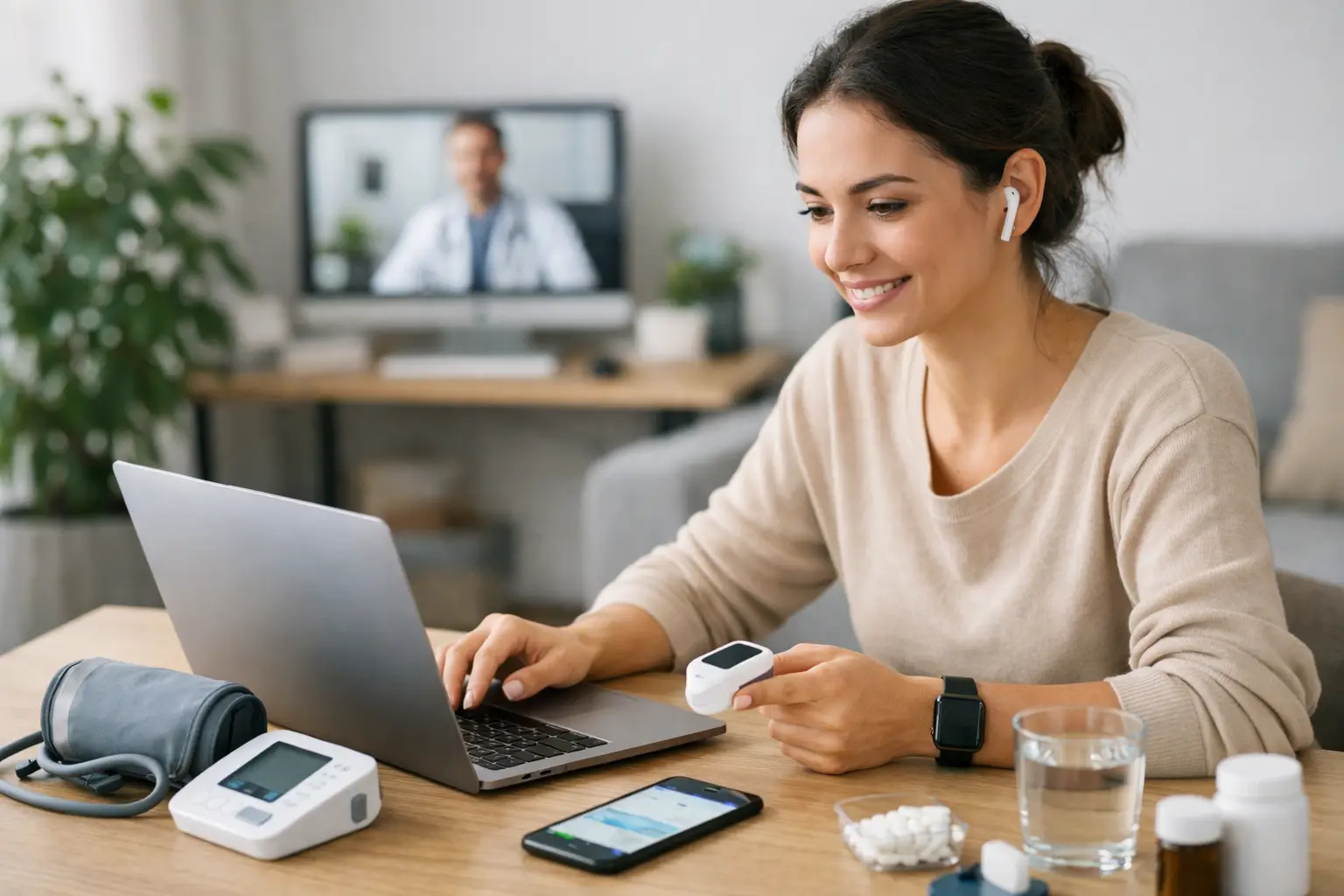
You bought the standing desk. You upgraded the chair. You added blue-light glasses, a lumbar cushion, maybe even a walking pad. And yet by 3 p.m. your lower back is tight, your focus is slipping, and sleep later still feels off. That is exactly why the best health assessment for remote workers cannot stop at ergonomics. If your body keeps sending the same signals, the problem may not be your setup. It may be the control system running underneath it.
What makes the best health assessment for remote workers?
Most assessments aimed at remote professionals are too shallow. They ask if you sit a lot, whether your screen is at eye level, and how many hours you sleep. That can be useful, but it rarely explains why two people can use the same desk setup and get completely different results. One stays sharp. The other gets neck tension, poor sleep, digestive disruption, and brain fog.
The best health assessment for remote workers should do three things well. First, it should connect symptoms instead of treating them like random annoyances. Second, it should help you identify a dominant pattern rather than hand you generic wellness advice. Third, it should lead to an action plan you can actually use while working, traveling, and living out of imperfect setups.
That last point matters. Remote work is not a controlled lab environment. Some weeks you are in a home office. Other weeks you are on a hotel chair, a bar stool, or a long-haul flight. If an assessment only works when your life is stable, it is not built for remote workers.
Why generic wellness checks miss the real issue
The standard model says your pain comes from posture, your fatigue comes from stress, and your poor sleep comes from screens. Sometimes that is true. But often those are surface-level triggers, not the full explanation.
Remote workers tend to stack symptoms. Tight hips become low back pain. Low back pain turns into poor sleep. Poor sleep turns into brain fog. Brain fog leads to more caffeine, worse recovery, and lower output. A generic wellness questionnaire usually splits those problems apart. It gives you separate advice for each symptom and leaves you to patch the system on your own.
That is where many people get stuck in expensive trial and error. They buy equipment, follow stretching videos, test supplements, and change routines without a clear model of what their body is actually doing.
A better assessment looks for a primary imbalance pattern. It asks a harder question: what if your recurring symptoms are not isolated problems, but predictable outcomes of one deeper control issue?
The shift remote workers need: from symptom chasing to pattern recognition
If you work online, your body is under a specific kind of pressure. Long static sitting, travel disruption, compressed recovery, screen demand, irregular meals, and low-grade stress all hit the nervous system hard. That does not just create discomfort. It can distort how the body organizes movement, energy, sleep, digestion, and focus.
This is why a precision-based assessment matters more than a broad lifestyle score. You do not need another app telling you to drink water and stand up every hour. You need a framework that explains why your symptoms cluster the way they do.
A pattern-based approach helps you stop guessing. Instead of asking, “What do I do for neck pain?” or “Why am I so tired lately?” you start asking, “What underlying imbalance is driving this whole chain?” That shift saves time. It also tends to produce better decisions.
What a stronger assessment should actually measure
A useful remote-worker assessment should not focus only on pain level or stress score. It should map relationships between symptoms.
For example, if your back pain flares at the same time your sleep gets lighter and your concentration drops, that matters. If your digestion changes when your neck tension spikes, that matters too. Those connections often reveal more than any single symptom rating.
This is where a structured zone-based model stands apart. Rather than framing the body as a set of disconnected complaints, it organizes symptoms into patterns of neurological or systemic imbalance. That gives remote workers something most health content does not: a decision-making map.
Under Dr. Thurman Fleet's Concept Therapy framework, the six Biological Zones offer that map. The point is not to create complexity. It is to simplify it. Instead of ten unrelated issues, you identify the dominant zone pattern likely affecting your output, comfort, and recovery.
For the right person, that is the missing piece. Not another mobility drill. Not another posture hack. A clearer explanation of cause.
Best health assessment for remote workers: what to avoid
There is no single assessment that fits every person. But there are common traps.
The first trap is the posture-only assessment. If it only tells you your shoulders round forward and your hips are tight, you probably already knew that. The real question is why your body keeps returning to that state.
The second trap is the broad wellness quiz that gives everyone the same advice. More sleep, more water, less stress, more movement. None of that is wrong. It is just too general to solve a recurring problem.
The third trap is the data-heavy tracker with no interpretation. Metrics can be useful, but if you are staring at sleep scores and step counts without a coherent body framework, you are still guessing.
The best assessment is not the one with the most questions or the prettiest dashboard. It is the one that identifies your likely primary imbalance and gives you a targeted next step.
What a good remote-worker assessment process looks like
For most people, a two-step process works best.
The first step is a fast symptom audit. This should be simple enough to complete in minutes but sharp enough to reveal a dominant pattern. If you are dealing with recurring pain, fatigue, poor sleep, or mental fog, speed matters. You want signal, not homework.
The second step is a deeper assessment that verifies the pattern and translates it into corrective action. This is where nuance matters. Some people have one obvious primary issue. Others have overlap. A stronger assessment can separate the main driver from secondary compensation patterns.
That distinction is important because remote workers often overcorrect the wrong thing. They stretch the area that hurts, strengthen the area that feels weak, or buy equipment for the body part that is complaining loudest. But symptoms do not always show up where the real problem starts.
A structured assessment pathway, like the one used by The Zone System Health Portal, is built around this exact problem. A short symptom scan helps identify the likely zone pattern, then a deeper assessment can confirm it and guide a more specific exercise protocol. For remote workers who are tired of random fixes, that structure is often more valuable than another generic wellness program.
Who benefits most from this kind of assessment
This approach tends to fit a specific kind of person. If you are a remote worker, founder, freelancer, or digital nomad whose lifestyle looks flexible on paper but your body feels increasingly less flexible in reality, you are likely a good candidate.
It is especially relevant if your symptoms are recurring, connected, and frustratingly resistant to the obvious fixes. Maybe your back pain eases for a week, then returns. Maybe your sleep improves on vacation but falls apart when work ramps back up. Maybe your brain fog tracks with body tension in a way no productivity app can solve.
It also fits people who want a clear explanation without spending months bouncing between disconnected solutions. That does not mean every symptom has one simple cause. It means a pattern-based assessment can often give you a much better starting point.
The trade-off: precision beats generic, but it requires honesty
There is a catch. A precision-based assessment only works if you answer honestly and follow the logic where it leads.
Some people want confirmation for the story they already believe. They want the answer to be their chair, their mattress, or their travel schedule because those feel concrete. Sometimes those factors matter. But if your symptoms point toward a deeper imbalance pattern, staying attached to a simpler story can keep you stuck.
That is the trade-off. A generic assessment feels easy because it rarely challenges your assumptions. A better assessment may show you that your most obvious symptom is not the main issue. That can be uncomfortable. It can also be the moment things finally start making sense.
If you are looking for the best health assessment for remote workers, aim for one that does more than describe your habits. Choose one that interprets your symptoms as a system, identifies a dominant pattern, and gives you a next step you can use in real life - not just in a perfect office.
Remote work gives you freedom. Your health assessment should give you direction. When your body stops feeling like a collection of random problems and starts making sense as a pattern, better decisions get a lot easier.
Educational Disclaimer: This article is authored by Dr. Chris Bowe, D.C. for educational and biomechanical wellness purposes only. It is not intended as medical advice or formal surgical diagnosis. Always consult a licensed healthcare practitioner regarding persistent pain or health conditions.
Dr. Chris Bowe, D.C.
Licensed DCDoctor of Chiropractic • Founder of DeskReliefNow
Dr. Chris Bowe is a licensed Doctor of Chiropractic with over two decades of clinical experience in spinal biomechanics, neurophysiology, and posture correction for remote professionals.