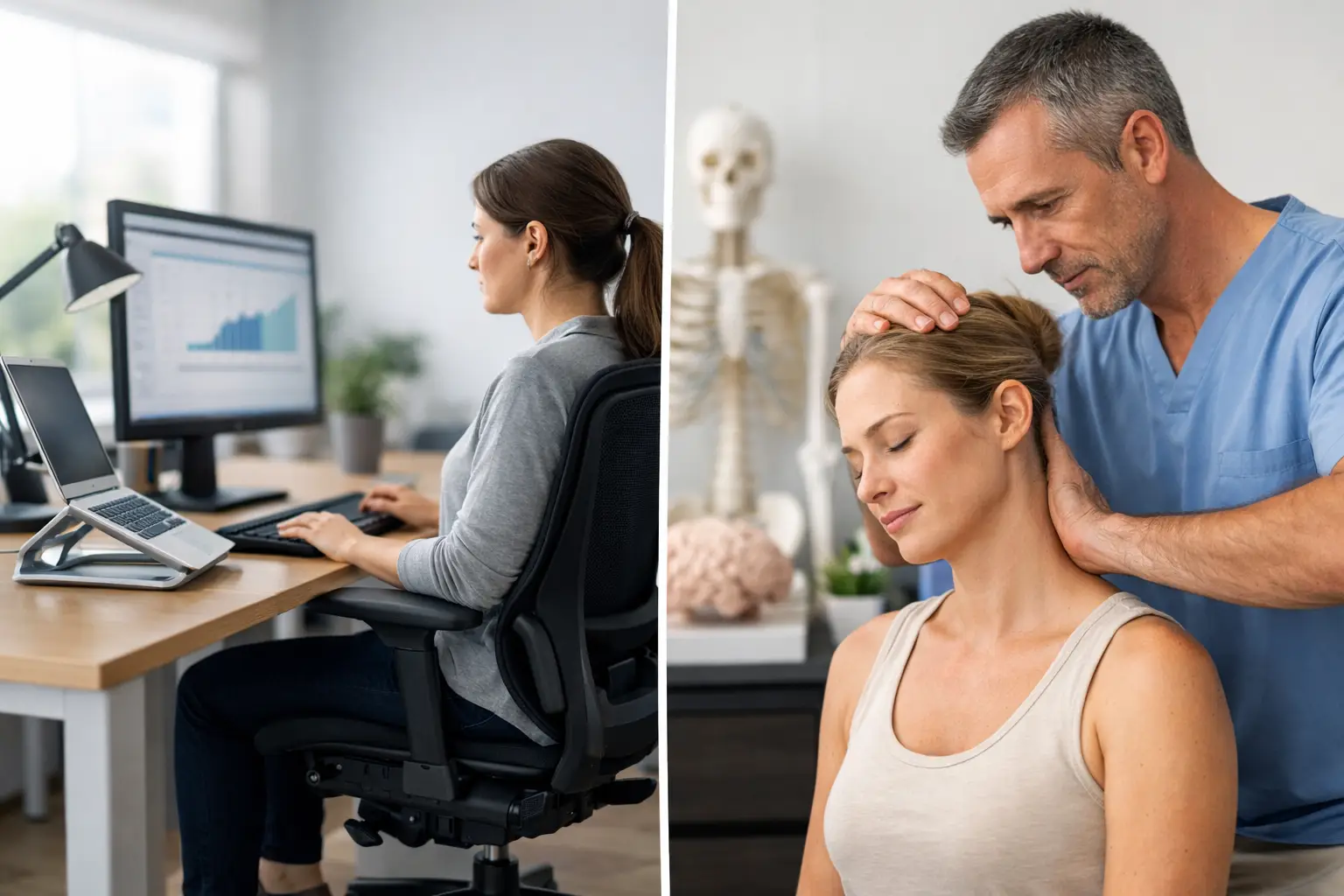
Your laptop stand is higher. Your chair is better. Your desk is cleaner. And yet your neck still tightens by 3 p.m., your lower back starts barking on travel days, and your brain feels half a step behind by the end of the week. That is where the ergonomics vs neurological balance approach question gets real. If better setup alone was the answer, a lot more remote workers would already feel fine.
The standard explanation says your body hurts because your workstation is wrong. Sometimes that is true. Bad angles, poor screen height, and repetitive strain absolutely matter. But when pain keeps coming back even after you fix the obvious variables, you are no longer dealing with a furniture problem alone. You are dealing with a body-control problem.
Ergonomics vs neurological balance approach: what changes?
Ergonomics asks a practical question: how do we reduce strain from the outside in? The focus is your chair, desk height, wrist position, screen placement, movement breaks, and load management. It is useful because your environment does shape stress on the body.
The neurological balance approach asks a different question: why is your body unable to adapt to normal demands in the first place? Instead of treating pain, stiffness, fatigue, poor sleep, and brain fog as isolated mechanical outputs, it looks at the control systems that regulate posture, recovery, tension patterns, and energy. That shift matters because many people are not failing due to one bad sitting position. They are compensating around an internal imbalance all day long.
This is the blind spot in basic ergonomic advice. Two people can work at the same desk for eight hours. One feels fine. The other gets headaches, tight hips, shallow breathing, poor focus, and restless sleep. If the workstation were the whole story, their outcomes should be much closer. They are not, because the nervous system and broader body regulation change how strain is processed.
Why ergonomics often helps - but rarely finishes the job
Ergonomics is not useless. It is just incomplete when used as a catch-all explanation.
If your monitor is too low, your neck will usually complain. If your keyboard position forces wrist extension, your forearms may flare up. If you never stand up, your hips and low back may stiffen. These are real inputs, and ignoring them is a mistake.
But here is the trade-off. Ergonomic fixes reduce external stress. They do not automatically correct the internal pattern that keeps recreating tension, poor recovery, and unstable performance. That is why some people keep buying new chairs, standing desks, seat cushions, blue-light glasses, and lumbar supports while still feeling physically off.
You can improve the environment and still leave the deeper driver untouched.
For digital nomads and remote workers, this matters even more. Your environment changes constantly. One week you are in a clean apartment setup. The next week you are on barstools, airport seats, couches, and hotel desks. If your strategy only works when conditions are perfect, it is fragile by design.
The neurological balance model starts with control, not comfort
A neurological balance approach does not begin by asking whether your chair is premium. It begins by asking which system is out of balance enough to distort posture, breathing, muscular tone, digestion, sleep, and mental clarity.
This is where a zone-based model becomes useful. Instead of dumping every symptom into one bucket called stress or bad posture, it organizes the body into functional patterns. That makes it easier to see why a person with back pain might also have low energy, inconsistent sleep, tension headaches, or brain fog. Those symptoms often travel together because they reflect one underlying control issue, not five separate bad habits.
This is a stronger explanation for people who have already tried surface-level fixes. When your body is stuck in compensation, your muscles are not simply tight. They are reacting. Your posture is not just sloppy. It is adapting. Your fatigue is not always a motivation problem. Sometimes it is the cost of running inefficient control patterns all day.
That distinction is the difference between chasing relief and identifying cause.
What each approach gets right
The honest answer in the ergonomics vs neurological balance approach debate is that both can matter. The problem is hierarchy.
Ergonomics gets the external load right. It helps you reduce unnecessary strain and stop provoking the same tissues over and over. It is often the fastest way to get partial relief.
The neurological balance approach gets the regulation problem right. It explains why some people remain vulnerable even in decent setups, why symptoms cluster together, and why recovery can stay poor despite doing many of the "right" things.
If your symptoms are mild, recent, and clearly triggered by a bad setup, ergonomics may be enough. If your pain is recurring, your energy is unstable, your sleep is inconsistent, and your focus keeps dropping, then a purely ergonomic strategy is probably too shallow.
That is not hype. It is pattern recognition.
Signs you may need more than ergonomic fixes
If you keep adjusting your workspace but still feel worse than you should, pay attention to symptom stacking. That usually means the problem is broader than mechanics.
A deeper imbalance is more likely if your discomfort shifts locations, if your pain returns quickly after temporary relief, if travel wrecks your body faster than it used to, or if physical symptoms show up alongside poor sleep, irritability, slow thinking, or unexplained fatigue. Those combinations suggest your control system is underperforming.
This is why generic posture advice can feel frustrating. It treats the body like a static structure that needs better alignment. In reality, the body is a dynamic system that needs better regulation. Alignment follows control more often than people think.
Why remote workers are especially vulnerable
Remote work sells freedom, but freedom without physical resilience gets expensive. You can work from anywhere, yet your body still has to process long sitting hours, screen intensity, disrupted routines, travel stress, inconsistent sleep environments, and low-grade mental overload.
That mix creates a perfect trap. You blame the chair because it is visible. You blame posture because it is easy to understand. Meanwhile, the deeper issue keeps building in the background.
This is why high-functioning people often miss the real problem. They are productive enough to keep going, but not regulated enough to feel strong, clear, and recovered. They normalize the decline because it happens gradually.
Then one day the symptoms are no longer minor. Work feels heavier. Focus takes longer. Recovery takes longer. Exercise helps less. Sleep stops resetting you.
At that point, another desk accessory is not a strategy.
A smarter way to use both approaches
You do not need to choose between common sense and deeper analysis. You need the right order.
First, clean up the obvious ergonomic stressors. Get your screen to eye level. Reduce awkward wrist and shoulder angles. Change positions more often. Stop pretending twelve static hours is normal just because you work online.
Then ask the harder question. Why does your body keep losing the ability to handle ordinary demands? Why do symptoms return so fast? Why are pain, fatigue, and mental fog showing up together?
That is where assessment matters. A symptom pattern tells a better story than a single complaint. If your body is signaling a primary imbalance, guessing from isolated aches will waste time. A structured audit can narrow the issue faster and point you toward targeted corrective work instead of endless trial and error.
The Zone System Health Portal is built around that logic. Instead of assuming your problem starts and ends with posture, it maps symptoms to a more precise control framework and helps identify where imbalance may be driving your recurring issues.
The real decision behind ergonomics vs neurological balance approach
This is not really a debate about chairs versus exercises. It is a decision about whether you want to manage symptoms at the surface or understand why your system keeps producing them.
For some people, surface changes are enough. For many remote workers, travelers, and laptop-bound professionals, they are not. The body is not failing because the desk is slightly imperfect. The desk is just revealing a control problem that was already there.
That is why the neurological balance approach resonates when ergonomic advice stops working. It gives you a more precise reason for what you are feeling, and precision changes what you do next.
If your body keeps asking for relief, stop treating every signal like an isolated complaint. The faster you identify the pattern behind the symptoms, the faster your work, travel, and energy can start feeling like assets again instead of stress tests.
Educational Disclaimer: This article is authored by Dr. Chris Bowe, D.C. for educational and biomechanical wellness purposes only. It is not intended as medical advice or formal surgical diagnosis. Always consult a licensed healthcare practitioner regarding persistent pain or health conditions.
Dr. Chris Bowe, D.C.
Licensed DCDoctor of Chiropractic • Founder of DeskReliefNow
Dr. Chris Bowe is a licensed Doctor of Chiropractic with over two decades of clinical experience in spinal biomechanics, neurophysiology, and posture correction for remote professionals.